HUIJUE TELECOM SITE ENERGY
Solar Telecom Energy for Always-On Networks
Custom-engineered photovoltaic, battery and hybrid power systems for cellular towers, repeaters, microwave links and distributed communication infrastructure.
OFF-GRIDSolar + storageWEAK-GRIDMulti-source hybridCRITICAL BACKUPProtected continuity
WHAT IS SOLAR TELECOM?
Energy engineered around network availability
Solar telecom combines photovoltaic generation, energy storage, power conversion, distribution and monitoring to supply communication equipment reliably. It may operate independently from the grid, reinforce an unreliable grid, reduce generator runtime or protect critical loads during outages.
Huijue sizes the site power path from the load, worst-season solar resource, autonomy target, climate, access limits and planned load growth.
TELECOM APPLICATIONS
Six applications with different power demands.
Select an application to review its load behavior, architecture choices, sizing inputs and deployment priorities.
Cellular Towers
Solar, hybrid and backup power for macro, micro and rural BTS sites.
View applicationWireless Repeaters
Compact autonomous energy for ridge, corridor and coverage-infill sites.
View applicationMicrowave Towers
High-availability power for critical backhaul and transmission links.
View applicationWi-Fi Networks
Modular off-grid power for public hotspots and distributed access points.
View applicationSecurity Cameras
Continuous energy for remote CCTV, analytics and wireless surveillance.
View applicationTower Lighting
Dedicated solar and reserve power for obstruction and safety lighting.
View applicationSOLUTIONS FOR EVERY GRID CONDITION
Choose the power architecture from site conditions
Architecture comes before product selection. Source availability, outage duration and the availability target determine the system layout.
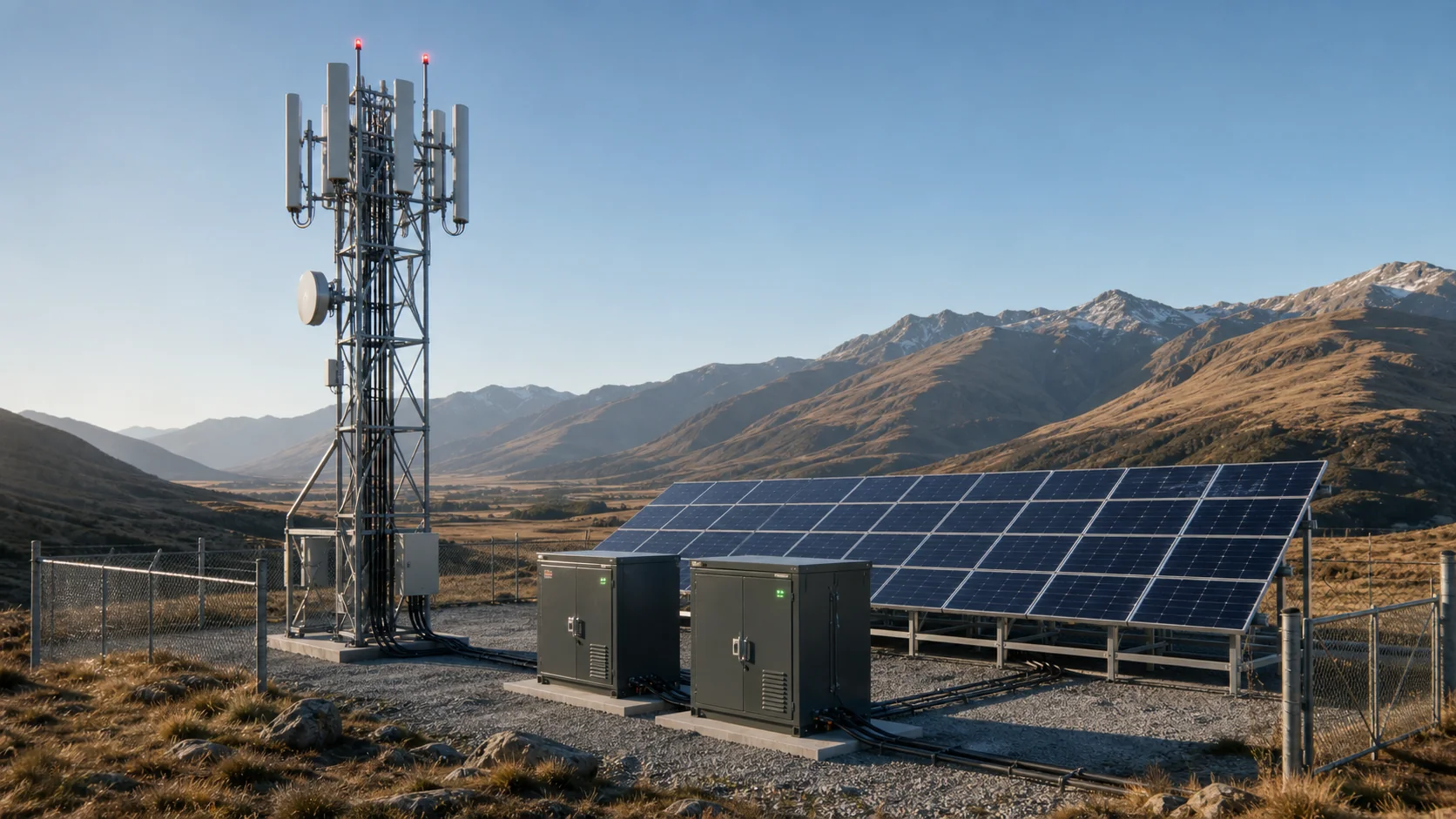
01
Off-Grid Solar + Storage
PV generation and usable battery reserve are modelled against the worst design season, site load and recovery requirement.
Best for: remote BTS, repeater and microwave sitesView solution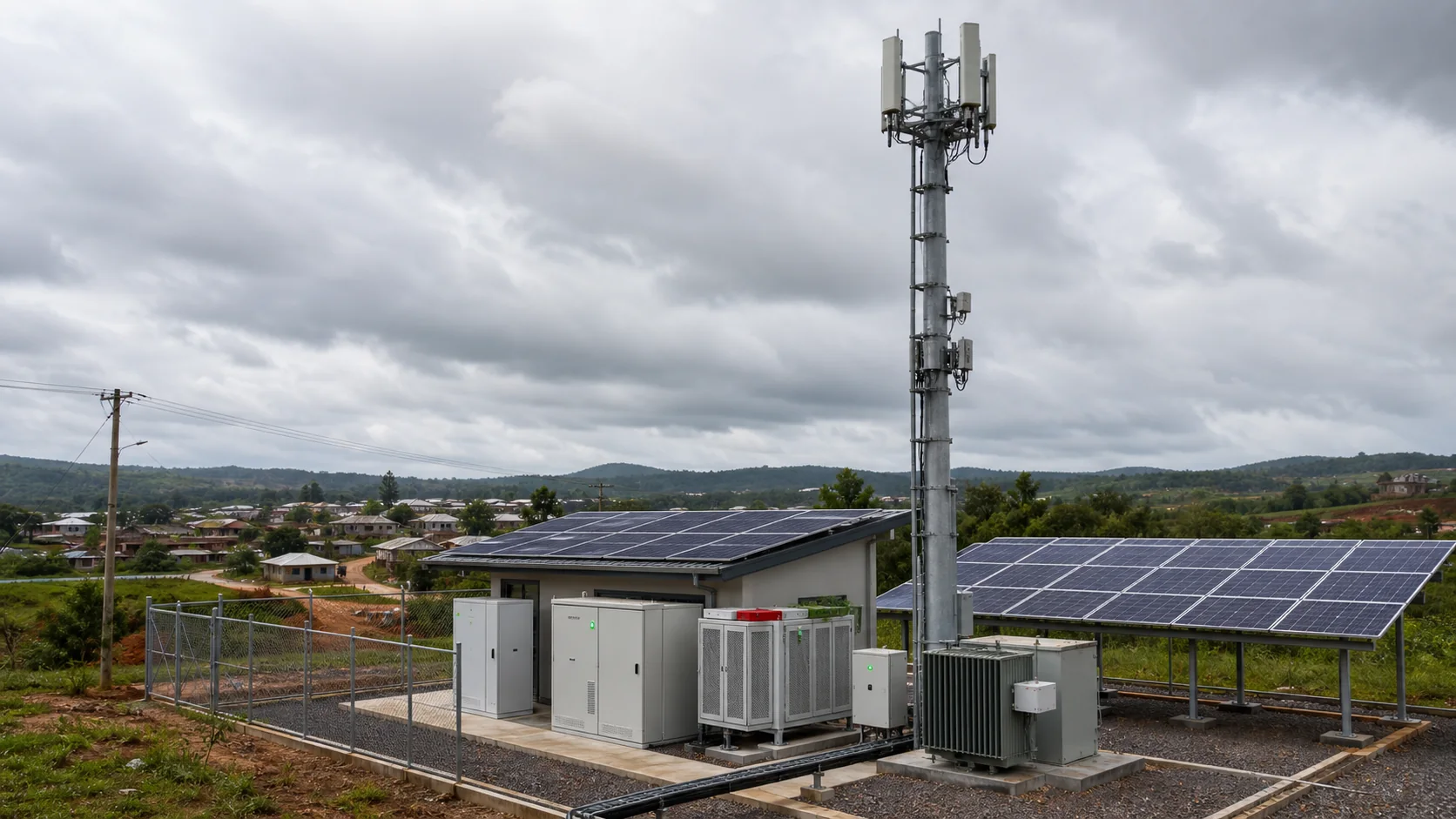
02
Weak-Grid Hybrid Power
Source-priority control coordinates solar, batteries and an unreliable grid to protect availability and reduce purchased energy.
Best for: frequent or long grid outagesView solution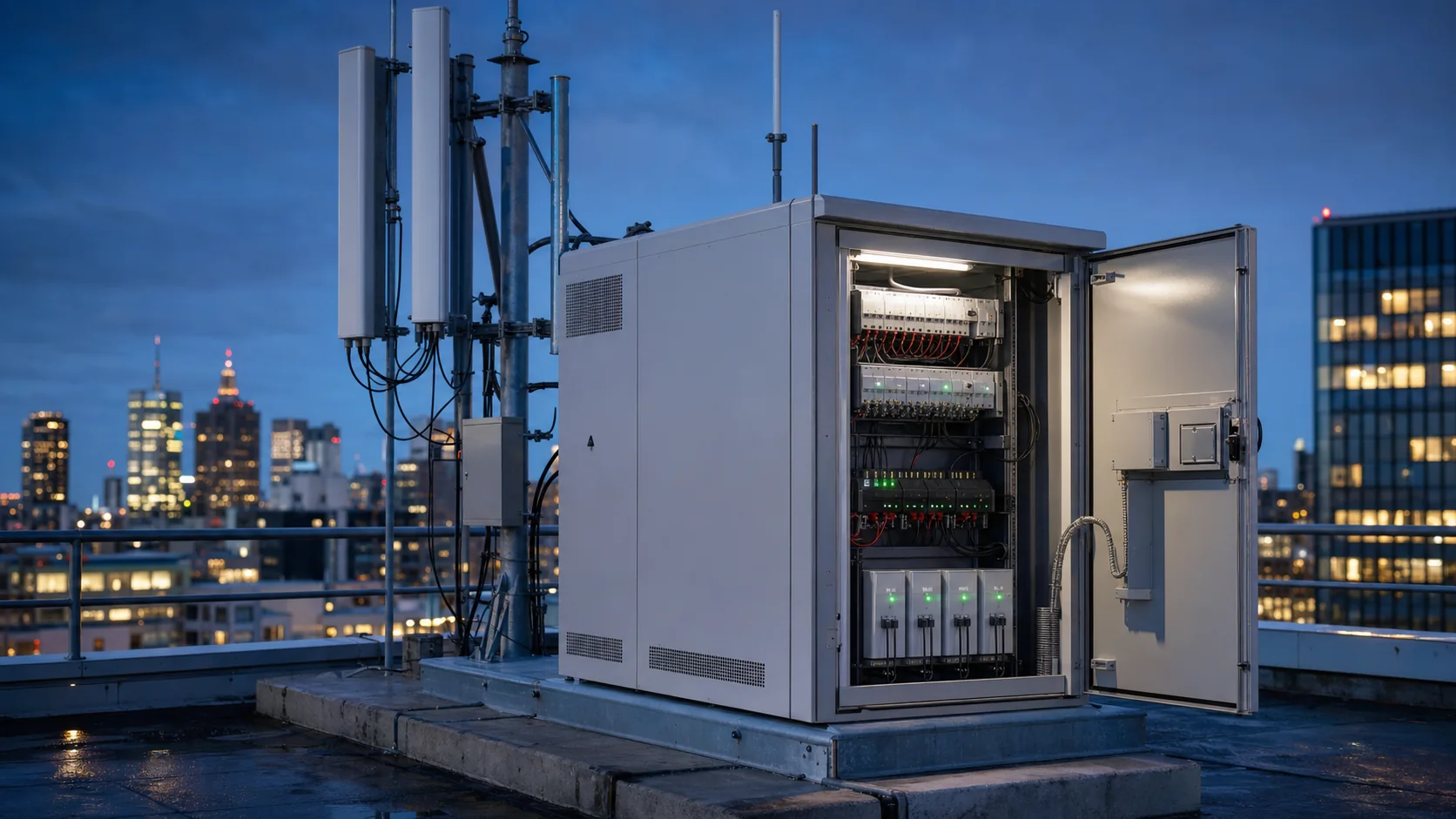
03
Critical Backup Power
Dedicated reserve, stable DC distribution and battery-health visibility maintain radio and transport loads through outages.
Best for: outage ride-through and planned maintenanceView solutionEQUIPMENT AND INTEGRATION
One controlled power path, from source to telecom load
Huijue integrates generation, storage, conversion, distribution and monitoring around the voltage windows required by the site equipment. Each component is selected against the same load profile and operating strategy.
01GENERATION
Solar PV Systems
PV arrays engineered for irradiance, terrain, wind zone, structure and maintenance access.
02STORAGE
LiFePO4 Energy Storage
Battery systems sized for usable autonomy, low-sun conditions, temperature and end-of-life reserve.
03CONTROL
Hybrid Power Controllers
MPPT solar control, grid and generator coordination, battery limits and load priority.
04CONVERSION
Inverters & Rectifiers
Stable AC and telecom DC conversion matched to radio, transmission and auxiliary-load interfaces.
05ENCLOSURE
Outdoor Energy Cabinets
Ingress protection, cooling, distribution and service access specified for the installation site.
06OPERATIONS
Remote Energy Management
Local or cloud monitoring, alarms, historical data, analytics and operating control.
QUALITY & COMPLIANCE
Documentation for specification, inspection and handover
Project documentation and factory records follow the exact equipment configuration, destination and agreed acceptance scope. Certification is checked against the supplied model—not a generic product family.
Design basisModel datasheetsFactory recordsHandover file
Review the engineering workflowLoad assumptions, architecture, electrical ratings and applicable standards recorded for review.
Datasheets, enclosure protection, battery configuration and destination requirements checked together.
Configuration records, factory test results, packing details and commissioning documentation.
CUSTOM TELECOM ENERGY ENGINEERING
Four controlled steps from site data to commissioned power
Every stage has a defined input, engineering decision and handover output, so technical and commercial teams can review the same system basis.
- 01SITE INPUTSAssess
Confirm the load profile, solar resource, grid condition, climate and physical constraints.
Output: verified design inputs - 02SYSTEM DESIGNEngineer
Model the energy balance, select the architecture and define ratings, autonomy and controls.
Output: concept, SLD and BOM - 03FACTORY DELIVERYIntegrate
Manufacture, configure, inspect and factory-test the equipment against the approved design.
Output: configured system and FAT file - 04FIELD HANDOVERCommission
Support installation, parameter checks, training and the transition into site operations.
Output: commissioned operating system
Start with the site data you already have.We can identify the remaining design inputs during the first review.
Send project requirementsREPRESENTATIVE DEPLOYMENT SCENARIOS
What changes from one site to the next
These reference scenarios show the engineering focus for different site conditions. Final results depend on verified site data and project scope.
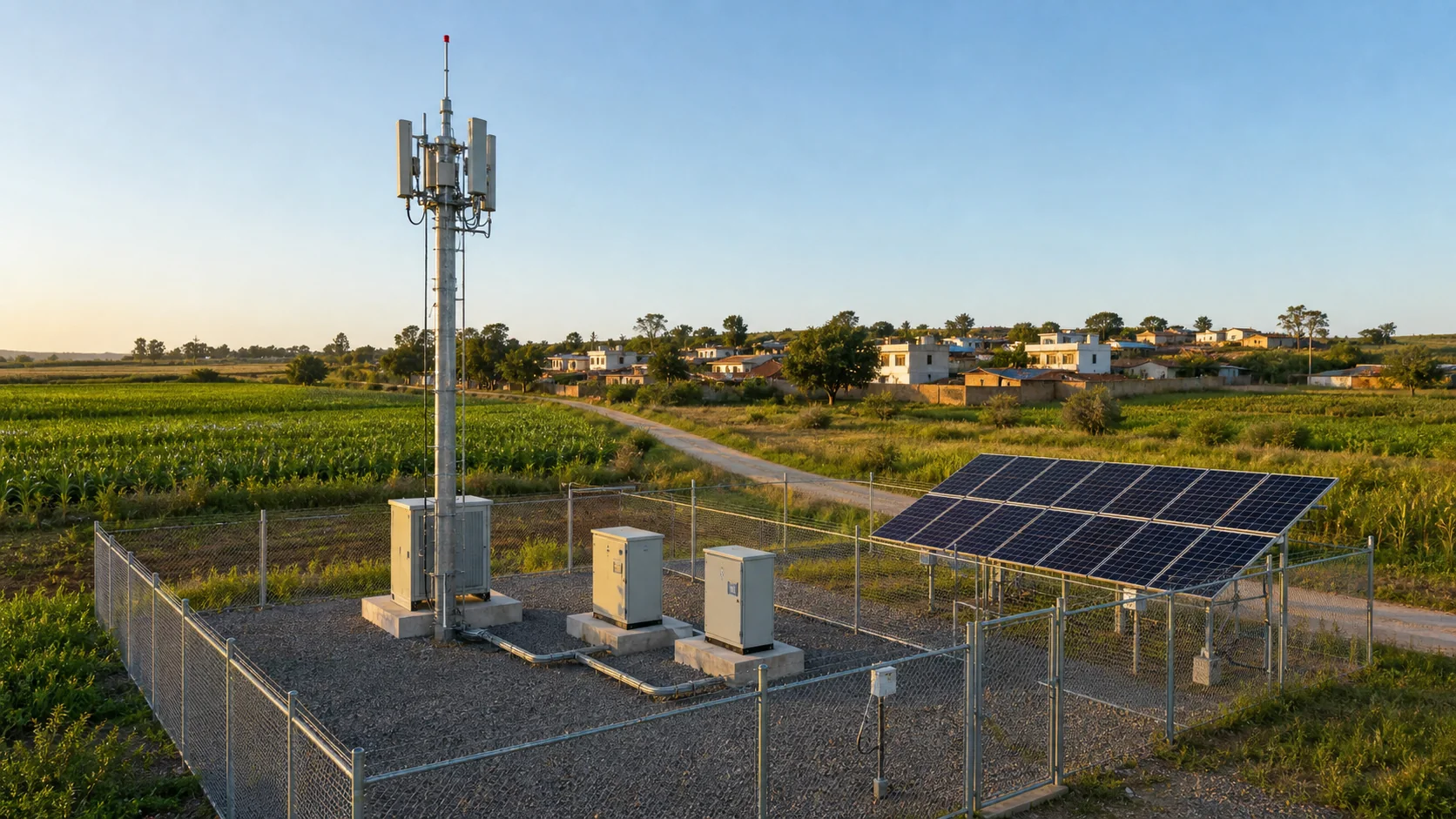
RURAL CONNECTIVITY
Remote off-grid BTS
Design focus: worst-season solar yield, autonomy, recovery time, low-maintenance storage and secure outdoor integration.
Explore cellular tower power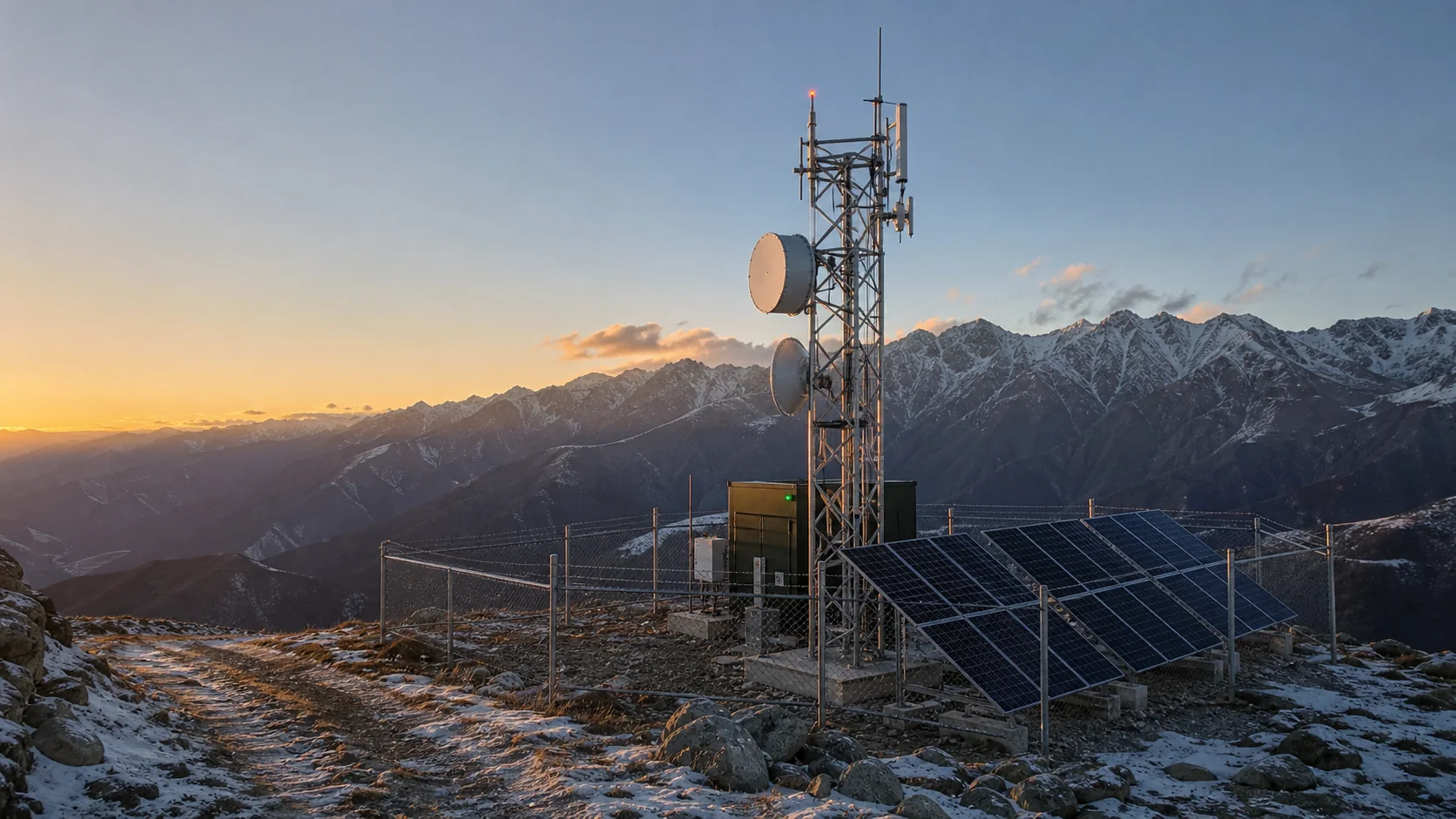
CRITICAL BACKHAUL
Mountain microwave link
Design focus: access limits, wind and temperature, resilient DC power, remote alarms and seasonal energy margin.
Explore microwave site power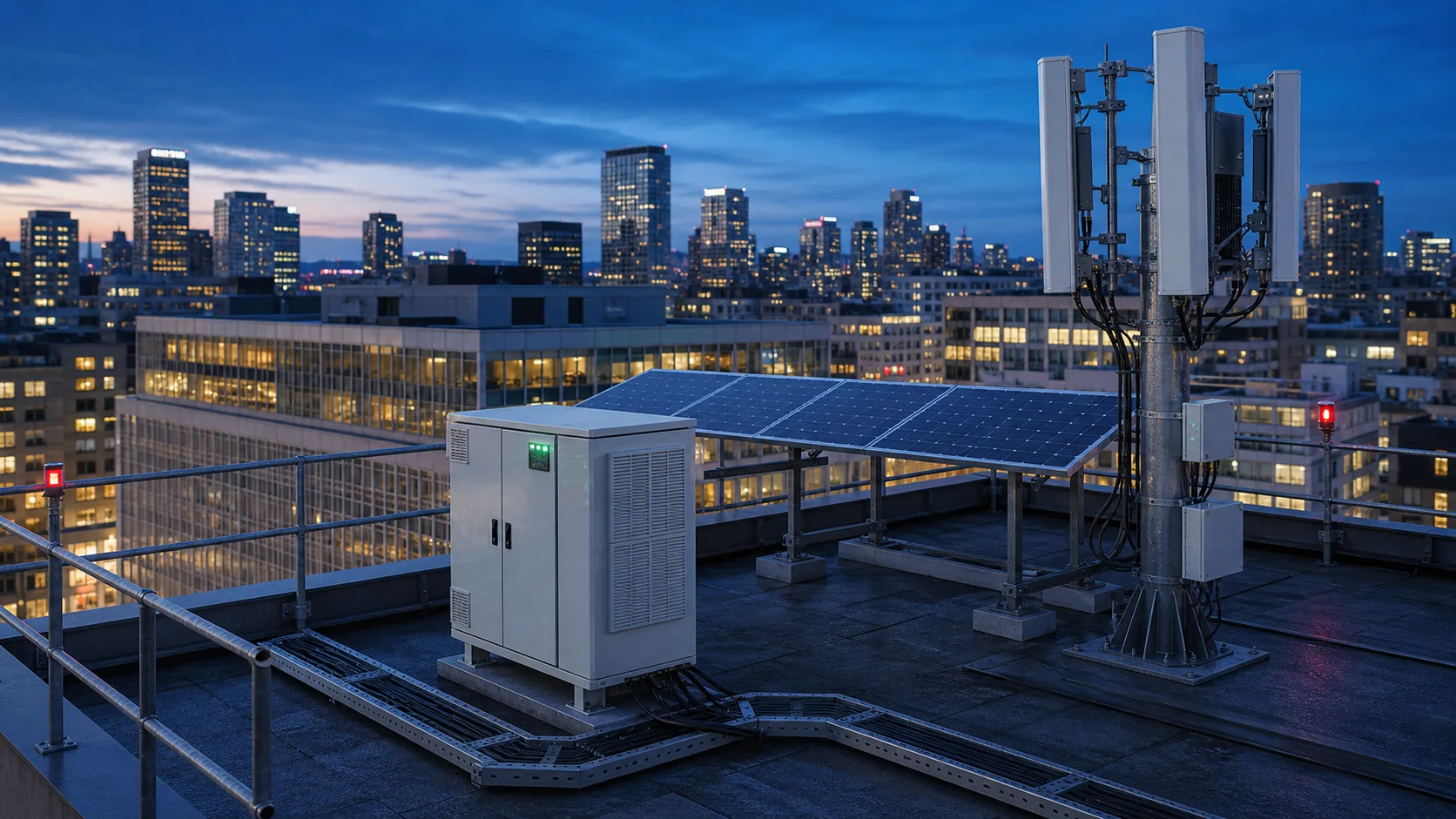
URBAN RESILIENCE
Compact rooftop backup
Design focus: footprint, protected reserve, low-noise operation, safe access and NOC-ready alarms.
Explore backup architecture
PROJECT TEAM PRIORITIES
What buyers, installers and operators need to see
Three practical requirements that keep a site-energy proposal reviewable from design approval through commissioning.
GLOBAL DELIVERY
Configured for regional operating conditions
Solar resource, grid quality, temperature, dust, corrosion, logistics, maintenance capability and local requirements all influence the final system. Huijue supports project definition for diverse telecom markets without assuming one universal cabinet.
ENGINEERING KNOWLEDGE CENTER
Engineering notes for specification and review
Use the Huijue industry guide and specialist articles to evaluate loads, operating modes, PV and battery sizing, lithium safety, outdoor cabinets, monitoring KPIs and standards.
Open the engineering guide- 01Site load and energy balance
- 02Architecture and source priority
- 03Storage, safety and lifecycle
- 04Monitoring, alarms and KPIs
LATEST TECHNICAL INSIGHTS
Build a better telecom energy specification

PRODUCT KNOWLEDGE
Telecom Power System FAT Checklist: What to Test Before Shipment
Use this telecom power system FAT checklist to verify documents, wiring, protection, operating states, alarms, load performance and shipment evidence.
Read article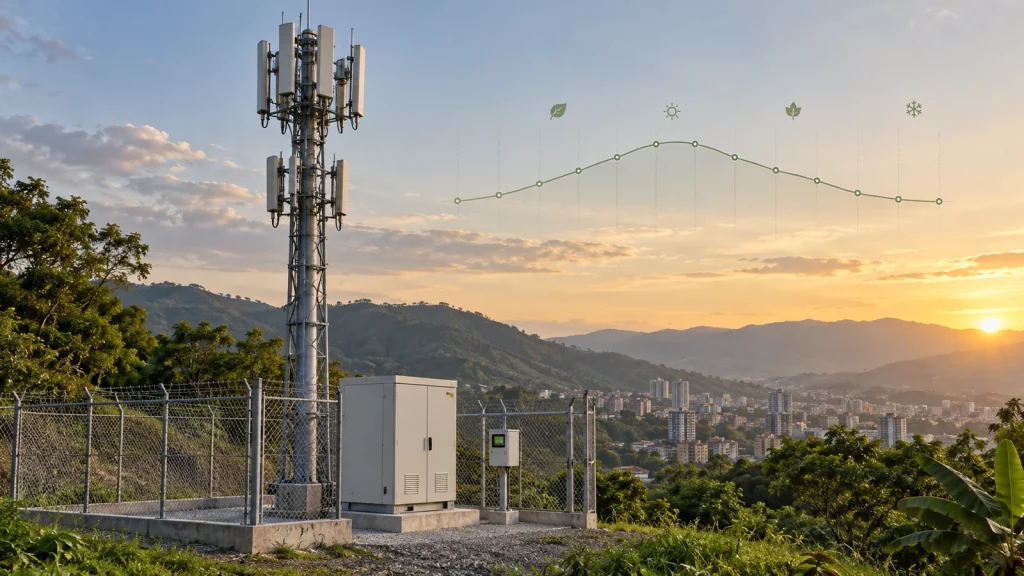
PRODUCT KNOWLEDGE
How Much Energy Does a 5G Macro Base Station Use per Year in Latin America?
Estimate annual 5G macro site electricity use in Latin America from measured average power, cooling, conversion losses and operating conditions.
Read article
PRODUCT KNOWLEDGE
Remote Cell Tower Monitoring: From Site Alarms to Maintenance Action
Learn how to turn cell tower power, fuel, cooling, security and connectivity data into prioritized alarms, work orders and verifiable maintenance.
Read articleMobile Network OperatorsTower CompaniesEPC ContractorsDistributorsInfrastructure Investors
SITE DATA TO PRELIMINARY DESIGN
Contact an Engineer